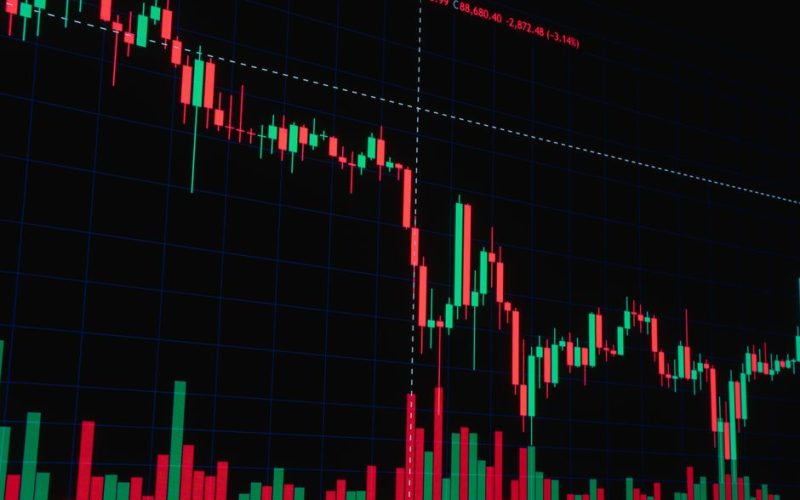
What is a stock market index, and how does it measure financial market health? At its core, an index acts as a statistical barometer designed to track a specific basket of underlying assets. Financial institutions and individual market participants rely on these benchmarks to gauge economic trends, measure portfolio efficiency, and evaluate sector performance.However, comparing different benchmarks often reveals surprising discrepancies in performance. While one market measure advances, another might decline over the exact same timeframe. This reportage explores the structural mechanics behind index construction, analyzing weighting methodologies, asset selection criteria, and why competing indicators produce distinctly different narrative outcomes for market observers.
What is a stock market index and how does it function?
Financial markets generate millions of transactions daily across thousands of publicly traded corporate entities. Tracking every individual movement creates overwhelming complexity for observers trying to understand broader trends. An index solves this challenge by serving as a standardized measurement tool that aggregates price changes across a defined subset of securities.
To understand the fundamental mechanics, imagine a representative basket containing selected corporate equities. Rather than monitoring each firm independently, analysts calculate a single numerical value based on the aggregated price changes of those constituents. As asset prices fluctuate, the index value moves proportionally to reflect overall movement within that specific basket.
Index providers establish explicit rules governing which companies enter or leave the basket. Selection criteria often include market capitalization, liquidity thresholds, operational headquarters, and sector classification. These objective rules ensure the benchmark maintains consistency and accurately represents the intended segment of the financial system over extended timeframes.
How Weighting Models Alter Benchmark Performance
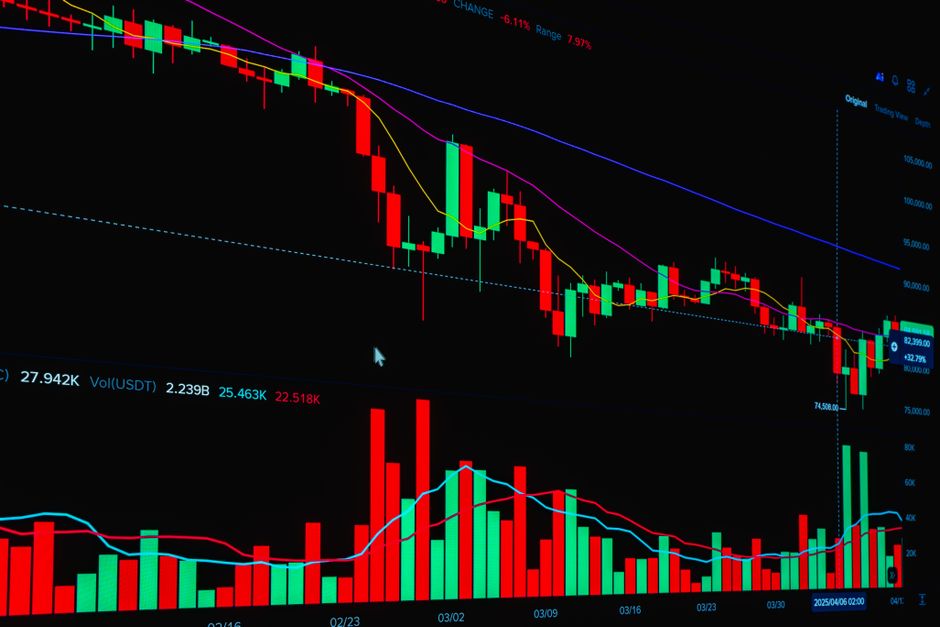
Two indices can track the exact same set of equities yet deliver radically different return figures. This divergence occurs primarily because of weighting methodologies, which dictate how much influence each corporate entity exerts on the total index value.
In a price-weighted system, companies with higher share prices command greater mathematical leverage over the benchmark. A ten percent move in a high-priced stock impacts the index more than a ten percent move in a low-priced stock, regardless of company size. This legacy approach can distort broader market representation when lower-priced corporate giants experience major earnings shifts.
Conversely, market-capitalization weighting adjusts constituent influence based on total market valuation. Larger corporations occupy bigger proportions of the basket. As a result, mega-cap firms heavily dictate daily index movements. An alternative approach, equal weighting, assigns identical influence to every constituent, offering a clearer view of average performance across all participating firms.
Sector Allocation and Constituent Divergence
Divergence also stems directly from sector focus and asset selection. Broad-market benchmarks incorporate enterprises across energy, healthcare, technology, consumer goods, and financial services. Targeted indices restrict their focus to specific industrial categories or asset styles.
When technological innovation drives market gains, technology-focused benchmarks record rapid upward movement. Meanwhile, broader indices experience moderated growth due to sluggish performance in traditional industrial sectors. The composition determines how sensitive the benchmark is to macroeconomic cycles, interest rate changes, and regulatory adjustments.
Furthermore, structural boundaries differ among index providers. Some indicators restrict eligibility strictly to domestic companies, while others include multinational firms with global operational footprints. These distinct parameters guarantee that two seemingly similar indicators will react differently to geopolitical developments and currency fluctuations.
Rebalancing Dynamics and Index Governance
Index management requires continuous oversight to preserve structural integrity over long periods. Committee members and algorithmic rules periodically conduct rebalancing and reconstitution. Rebalancing restores designated target weights, whereas reconstitution adds growing companies and removes failing ones.
These scheduled adjustments introduce performance variations across competing benchmarks. An index that rebalances quarterly captures short-term price momentum differently than one rebalancing annually. Furthermore, the turnover process forces buying high-performing assets and selling underperforming ones, creating structural trade impacts.
Governance committees also exercise discretion during extraordinary corporate events such as mergers, spinoffs, or bankruptcies. How an index provider handles corporate restructurings can subtly alter performance tracking. Consequently, identical market conditions yield non-identical benchmark returns based on governance protocols.
Interpreting Divergent Signal Output in Real Time
Understanding why indices diverge allows market participants to interpret broader economic signals accurately. A single index rising to record highs does not automatically imply uniform strength across the broader economy. It may simply indicate that a small group of heavily weighted constituent companies is driving the gains.
Evaluating multiple benchmarks side by side provides a more complete narrative of financial health. Comparing market-cap weighted measures against equal-weighted counterparts reveals whether rallies are broad-based or concentrated in dominant firms. Analyzing sector-specific benchmarks isolates localized industry expansion from systemic economic shifts.
Ultimately, recognizing the mechanics behind benchmark creation prevents misinterpretations. Every index serves a tailored purpose with distinct design parameters. Knowing what is a stock market index designed to measure helps observers extract meaningful insights from complex financial data outputs.